


According to a Teen Environmental Impact Survey, around 75% of teenagers worry about the future of our planet. Woodgrove High School is planning to act on this growing trend, and that is by establishing something that Loudoun County Public Schools has yet to see: Woodgrove is getting ready for an environmental academy.
The goal for the rising Woodgrove Environmental Academy is that it will be a program where high schoolers or rising high schoolers all over Loudoun County can attend Woodgrove and take part in environmental classes. Woodgrove’s environmental staff is putting together the curriculum, schedules, proposal papers and more for the next school year. Fortney, the coordinator of the environmental academy, claimed, “We’re calling ourselves Environmental Pathway right now, hoping to get an academy, but [the academy] is a Loudoun County program, we’re the ones initiating it.” This is very rare for a school to propose an idea like this in Loudoun County. Fortney agreed, “We’re the first special program like this that started at school level instead of starting at the administrative level with the county offices…we’re sort of their test case.” Even though the environmental academy may start as a centralized location at Woodgrove, it is a goal that in later years the program could spread into other Loudoun County Schools. Fortney remarked, “I think best case scenario, we’re successful with it, and then they may offer it at 3 locations across the county…we’re trying to be a model for that. [Potentially] they’ll have [our program] in the west, one central, and one in the east if students want to come from other schools.”
Although Woodgrove students may have heard of or taken environmental classes during the school year, this academy will be a much bigger change. Ms. Danielle Turk, who teaches environmental chemistry, explained, “This [environmental] academy will provide students with authentic experiences and engaging opportunities in the field of environmental science.” Although a lot of progress has been made, there is a large amount of arranging to be done for the final product of the environmental academy. Fortney expressed, “It’s sort of like the old expression: you’re building a plane as you’re flying it.”
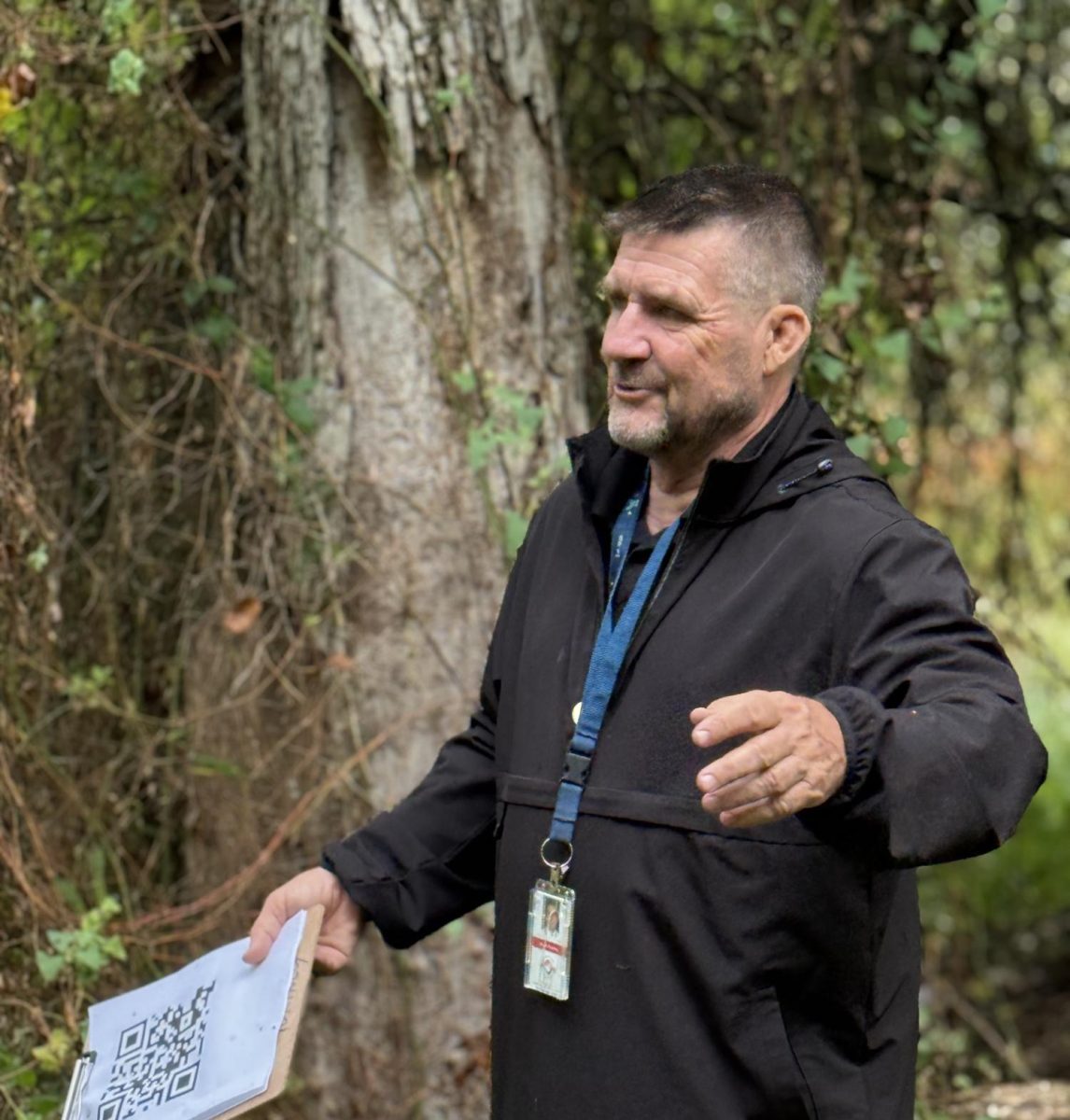
For the 2025-2026 school year, the environmental academy plans to provide classes such as environmental biology, environmental chemistry, environmental earth science, and environmental English. While an environmental class shares many similarities with a standard class, an environmental class has a main focus on the environment. Turk shared, “I prioritize providing [students] with authentic experiences in the environmental science field: emphasizing relevant topics and hearing from guest speakers who are environmental science experts.” In comparison to standard classes, environmental classes also provide more outdoor experiences and field trips. Teachers typically take nature walks and visit the outdoor classroom with their students to give them an enhanced understanding of the environment. So far, Mr. Christopher Looney’s environmental earth science class has gone on two field trips, one of them to Stony Man Trail in Shenandoah National Park and the other to Oak Springs Gardens in Upperville. As well, Turk’s environmental chemistry class plans to go to the National Aquarium in Baltimore in the future.
Even though the field trips and outdoors are big factors that attract high schoolers and rising high schoolers to take part in environmental classes, there is so much more that the program can provide. Ms. Kathryn Gemmer, Woodgrove’s Science Department Chairperson, discussed, “The work experience and the ability to follow a passionate pathway of interest at high school level and to not wait to do that at college are the two things I think are wonderful about [the environmental pathway.]” Additionally, environmental learning can also lead to future job opportunities. Dr. William Shipp, the Principal of Woodgrove, added, “I think we have a number of students who are very passionate about the environment and they’re looking at careers they could possibly get involved in, [environmental education] might be able to help.” The environmental academy’s objective is to give students an advantage for those who are interested in an environmental learning pathway.
While things may appear to not be changing in the community, the Earth is always developing, and many students are curious about that topic. It can be very important for the future generation to learn about the growing world around them, and Woodgrove is working to make this possible. Looney expressed, “I think [environmental education] makes life better…maybe [teaching environmental classes] doesn’t put more money in my pocket, but it makes my life better.”