


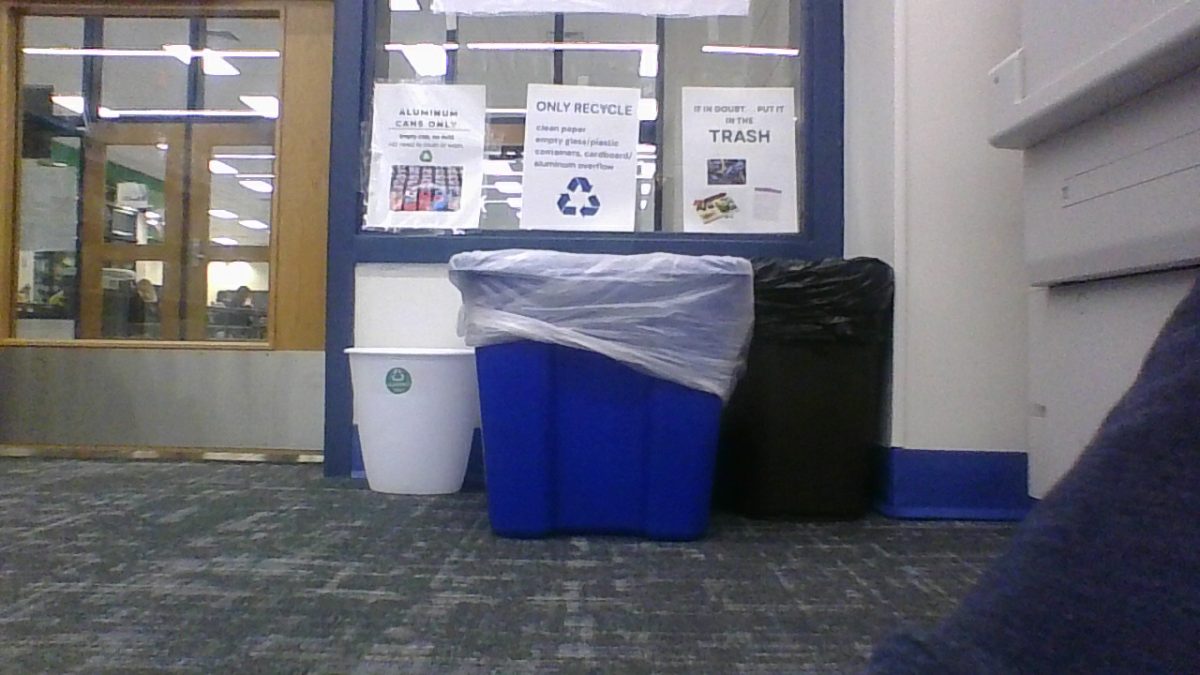
Recycling has been taught since kindergarten. But in recent times at Woodgrove, science teachers Mr. Scott Fortney and Mr. Steve Pyle want to take Woodgrove on a greener path.
This Recycling initiative began as an action project by students to sort out what is recyclable and what is not. Pyle said, “if there’s any contamination, in other words, stuff that isn’t recyclable in the [recycling bin], then they just take the whole [recycling bin] to the regular landfill. So it doesn’t matter if it’s mostly recyclable, they just don’t do that.”
This problem of recycling going to the trash has been going on for years and has affected most aspects of the county. As the foundations of this project were being planned, Fortney took the opportunity to involve students in this initiative. He said, “I’m what’s called a ‘Green Team Lead.’ This is a push within the county to [better] environmental literacy.” The project was created based on a combination of ideas in the environmental science classes and Clark Spied’s the head of the Green Team Lead in Loudoun County had the idea to have projects within schools that students are involved in. The initiative is all volunteer work from students in their study halls. Sophomore Johnny Honcharik joined the project because of his belief in it being a great cause. How the operation works is that two to six people go around the school and collect the cans and dump them in bigger cans outside before bringing them back to the classroom and this new system is all volunteer from many study halls. One of the new developments that you see in classrooms are the aluminum bins, which are only for aluminum cans, such as energy drinks. Before the recycling initiative, these cans would get crushed, and thrown in the regular trash or go to recycling. Now, they are being collected so they can be used for the Special Education Department to help students in their skill-based programs. Pyle explained, “We thought that since we’re collecting and starting a new program, we could just separate out that aluminum instead of [it] going to the recycling plant so that it could go to special education [students].”
This initiative is only in its beginning stages. Mr. Fortney has already begun thinking of growing the project with student ideas at the forefront. He mentioned plans to begin composting the leftover food in the cafeteria, but acknowledges the challenges at hand. “There’s so much food in some schools [that go to waste] that there is no way you can do composting on site. So that would probably be a third party vendor in the future. But at least [the county] knows what we’re trying to do with recycling here. They used us as one of the example case study schools to come in and take a look and see how things work,” Fortney explained.
Fortney hopes that the effort that is starting at Woodgrove could transfer to students’ homes and future homes. Fortney described, “The bottom line is [that] it’s not like we’re going to save the world in terms of just what we save here in the classroom at Woodgrove High School. Woodgrove is a learning institution. You learn about math, science and history, but you can also learn about habits and the importance of sustainability.” Fortney expressed, “Making the students more aware of their choices in recycling is a life skill, not just something where what’s going to happen in Woodgrove changes things. Just like how learning the math skills here does not necessarily matter in the moment, but it is going to matter in their future careers.”