


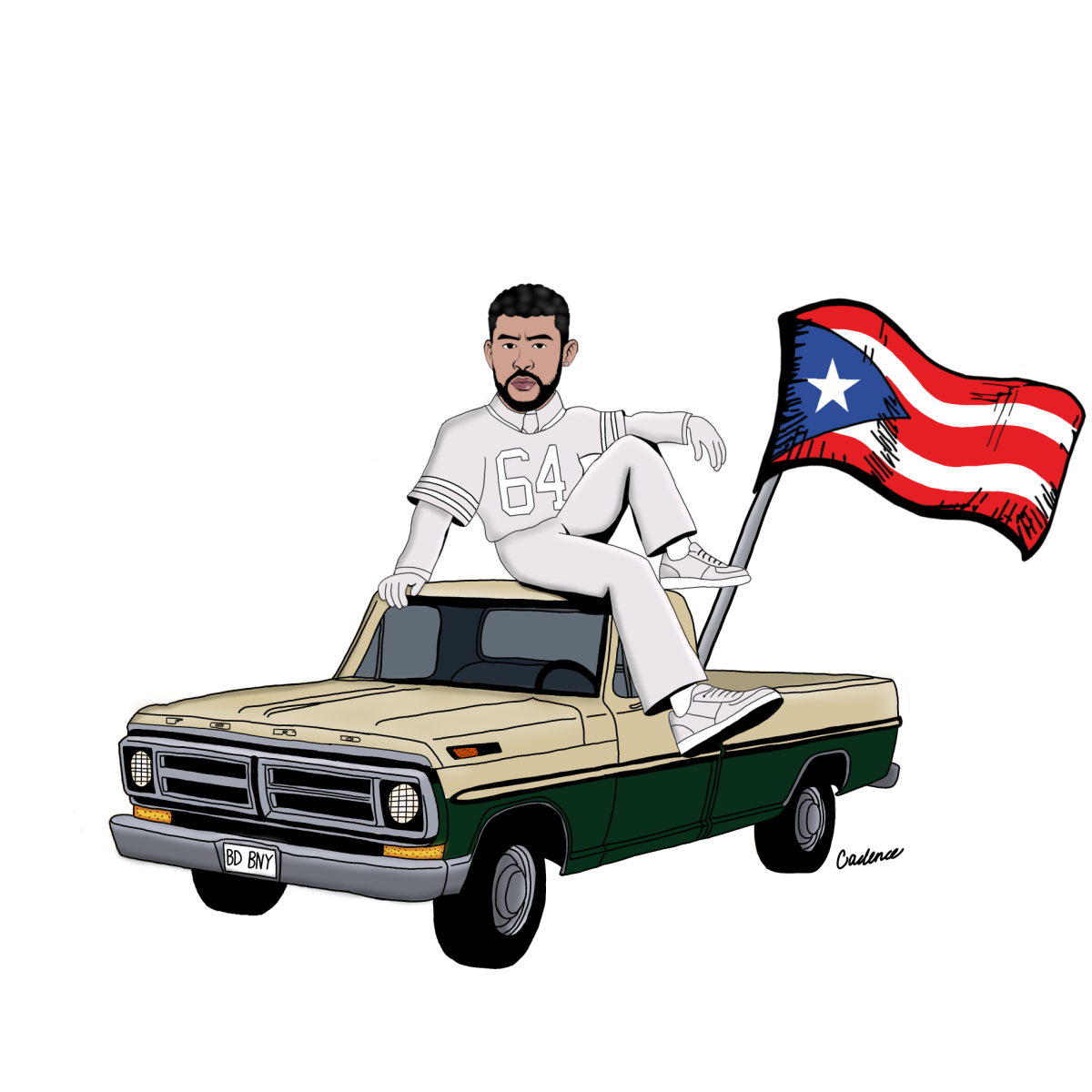
53% of Americans view the National Football League (NFL) as the number one major sport in America according to Pew Research Center. On February 8, the NFL celebrated its 60th Super Bowl, a milestone meant to showcase football at its highest level. But, Super Bowl LX was not defined by the final score alone. Puerto Rican singer, Benito Antonio Martinez Ocasio, better known by his stage name, Bad Bunny, headlined the official halftime show. At the same time, Robert James Ritchie who performs under the stage name Kid Rock, appeared in an alternative broadcast hosted by Turning Point USA (TPUSA). What should have been one shared moment became two separate stages, each reflecting a different audience.
In the past, halftime shows started out with marching bands and drill teams, but now have evolved to pop-culture performances featuring major well-known artists. It wasn’t until 1970, where Broadway superstar Carol Channing, from “Hello, Dolly” was considered to be the first modern celebrity performer at the Super Bowl. After the late years of the 1980s, the Super Bowl halftime show was more normalized by celebrity artists when global sensation, Michael Jackson, first set in stone the modern pop concert halftime show (Super Bowl XXVII) in 1993. He held the groundbreaking title for most watched halftime show for over 30 years with more than 133.4 million viewers. Ticket prices increased rapidly to hundreds of dollars after his performance was a hit. It also led to a rise of halftime performances by many other major artists such as Aerosmith, Brittany Spears, and The Rolling Stones. These artists set the foundation for people to look forward to another part of the Super Bowl that does not necessarily concern football. The Super Bowl halftime show was seen as more than a large-scale classical recital; it was viewed as a theatrical performance.
The official Super Bowl LX halftime show opened with Bad Bunny walking through a set designed to look like a sugarcane field, with dancers and extras portraying everyday scenes. He performed a series of his hits, moving between reggaeton and Latin trap. Bad Bunny performed primarily in Spanish, and the production featured fast paced choreography and moments that reflected his Puerto Rican heritage. Although junior Noah Goff watched the official halftime show on his phone, the place he worked at streamed the Turning Point halftime show. Goff expressed, “If I had to say I liked one, it would probably be the TPUSA halftime show, but overall, I didn’t like either of them.”
The performance included a real wedding, with a couple exchanging vows on stage while Bad Bunny signed the marriage certificate. Following that segment, Lady Gaga appeared to sing her song, “Die With a Smile”, with a salsa band. Other performers such as Ricky Martin, and additional guests like Cardi B, Pedro Pascal, Jessica Alba, Karol G, and Alix Earle were seen in the crowd. An average of 128.2 million viewers tuned in to Bad Bunny’s performance. The performance ended with dancers and Bad Bunny holding up flags from different countries, and the screen displayed the words, “the only thing more powerful than hate is love.” Maddie Williams, a junior, was one of the viewers who watched the Bad Bunny performance. She expressed her appreciation towards the message behind the show. Williams commented, “I really liked the house on the set, the stage, and then all of the people who were dressed as the grass. But he brought all of the flags just to show that we’re very integrated and we’re a united nation.”
The alternative program streamed by TPUSA was entitled “The All American Halftime Show” and aired at the same time as the official Super Bowl broadcast. The event was headlined by Kid Rock and featured performers from country and rock artists including Brantley Gilbert, Lee Brice, and Gabby Barrett. The show began with a spoken tribute to the late founder of TPUSA, Charlie Kirk, and included a mix of musical performances. The broadcast was streamed online from a venue in Atlanta and lasted about 40 minutes, drawing over five million viewers across various platforms. Goff stated, “I’ve enjoyed some of the songs he’s put out during his early run in the 90s. I personally liked the Turning Point [show] compared to Bad Bunny’s because I could at least understand what they were doing. And the music is just kind of what I would listen to.”
Many viewers appreciated the alternate broadcast because it aligned with their views, and it gave them a way of understanding the performance. Others, however, felt it was unnecessary and disrespectful. Senior Amanda Dickson, who watched the official halftime show, shared her discontent of broadcasting a separate performance. She stated, “In a country [that is] supposed to be considered a melting pot of different cultures, and is a place where everyone can come to be free and expressive, I thought [the TPUSA show] was really contradictory to that whole point.”
Both Kid Rock and Bad Bunny are not new to performing for a massive audience. In 2004, Kid Rock, Janet Jackson, Justin Timberlake, and Nelly performed at the 38th Super Bowl. Bad Bunny performed at the 54th Super Bowl with Skakira and Jennifer Lopez. However, during the 2026 Super Bowl, both Kid Rock and Bad Bunny performed to send different messages to their audience. TPUSA claims that the purpose of Kid Rock’s performance was to serve as a conservative counterprogram that honors “faith, family and fun,” while Bad Bunny aspired to promote cultural identity and unity. Kid Rock was nominated for many musical awards including a Grammy and People’s Choice Award in the country genre. Bad Bunny won six Grammys and many other awards. Senior Kassidy Donohoe watched the Superbowl mainly for the Bad Bunny halftime performance. Donohoe mentioned, “It’s a fun tradition [where] people who don’t like football get to come and watch this amazing performer.”
Despite both of these artist’s credentials, many people have opposing views on them. Several uncommon celebrities took part in this Super Bowl controversy, such as YouTuber Jake Paul, who tweeted that he is going to purposely turn off the halftime show because he doesn’t want to support “a fake American” citizen who “hates America” perform. Along with Jake Paul, the President of the United States, Donald Trump, reported in a tweet that he believes that Bad Bunny is “disgusting”, and even though was not present at the halftime show, he refers to it as “one of the worst ever” because it didn’t represent the “greatness of America”.
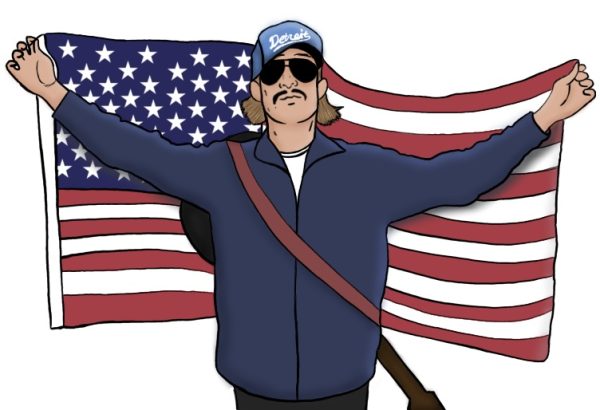
Other celebrities jumped in on the political drama, such as country singer Zach Bryan, who expressed feeling second hand embarrassment by Kid Rock’s performance. He tweeted that “I don’t care what side you’re on, a bunch of adults throwing temper tantrums and their own halftime show is embarrassing…” He also said that he felt more American watching the Bad Bunny halftime show. Although junior Anna Verhey did not watch either of the Super Bowl halftime shows, she emphasized how social media caused her to stay in the loop with the political tension. Verhey expressed, “It’s an example of how we can kind of coexist, around something that’s so central to American identity, like football. Even something like that can get divided at times over something like a halftime show,”
Some American viewers believed that having two halftimes shows allows for more diversity to display, while others believe that it created more division. Verhey shared, “My hope would be that there would just be one halftime show, because while it does maybe alleviate tension to have to give people another option, I think that we should always strive for unity, especially around something with a Super Bowl that has so many hundreds of millions of viewers.” Meanwhile, Donohoe claimed, “I think that there definitely could be talk of doing another alternate broadcast next year depending on who the NFL chooses to be their performer. I think that this could be setting a precedent for years going on, but I think it’s definitely not a good precedent to set.”
In the end, the Super Bowl LX halftime was not just a performance, it was a moment that highlighted how divided and diverse the entertainment landscape has become. Bad Bunny took the official NFL stage with a global genre-blending spectacle that reflected the league’s ongoing push toward international appeal and cultural representation. At the same time, Kid Rock headlined a separate broadcast that catered to a different audience entirely. Rather than competing on the same platform, the two shows symbolized two distinct visions of what halftime entertainment can represent. One was backed by the NFL and broadcast to millions worldwide; the other existed outside the stadium, fueled by counterprogramming and cultural commentary. Together, they turned halftime into more than a musical break. They made it a reflection of the broader conversations shaping American pop culture today.