


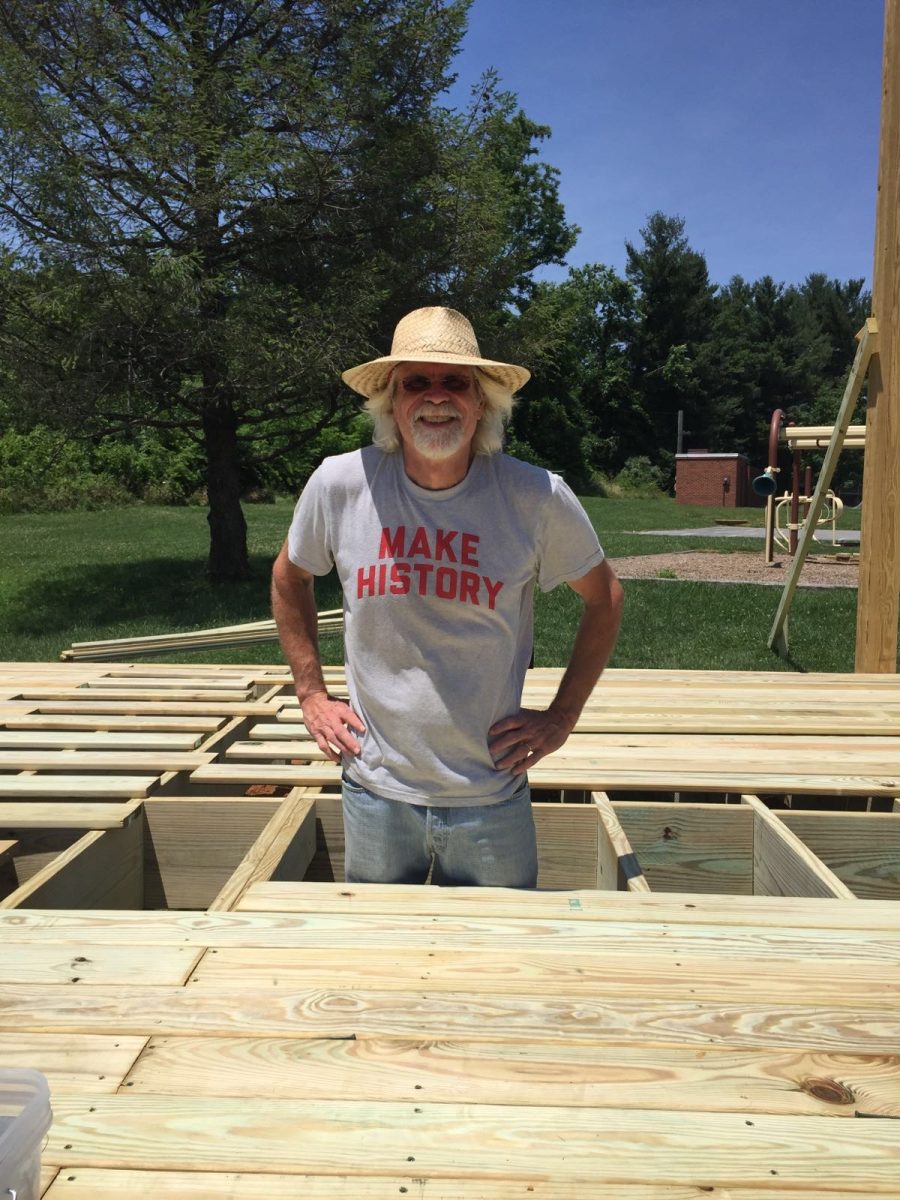
The small, historic town of Hillsboro, Virginia boasts a population of a little more than 100 people and is home to a much-beloved mayor. Roger Vance, who has been involved in the Hillsboro Town Council for 28 years and is currently serving his 10th consecutive term as town mayor, has become a major figure in Western Loudoun through his contributions to preserving and improving Hillsboro’s community.
When Vance first moved to Hillsboro in 1995 with his wife and son, he had not expressed any deliberate interest in local government. It was only thanks to Hillsboro’s blank ballot that Vance was first placed on the Town Council. “I got a call that night from the mayor congratulating me on being elected to town council, and I wasn’t running. That’s just the way it works,” Vance explained.
Vance became heavily involved in the town council when the advent of major demolitions and developments in Loudoun County presented a potential threat to the historic makeup of Hillsboro. Despite being one of the least populated towns in the Commonwealth of Virginia, Hillsboro’s history dates all the way back to the 18th century. If unprotected, the town’s historic landmarks and buildings could be washed away. “That’s when I started getting very involved…We’ve got to protect Hillsboro, [and] we need to protect the environments around it as well,” Vance expressed. In 2004, the same year Vance was elected as mayor, the council completed its first comprehensive plan to legally protect Hillsboro from unruly development.
Throughout Vance’s time as mayor, the main focus of Hillsboro’s local government has been the maintenance of the beloved historic aspects of the town, while still adapting to contemporary needs. Several years ago, Vance succeeded in obtaining $30 million from the Virginia Department of Transportation for the improvement of local roads. Junior Shea Voss, who has lived in Hillsboro since she was two years old, noted how crucial these changes were. “When he started that project, there were no sidewalks. There weren’t any of the water fountains, nothing like that, and he completely changed it,” Voss shared. While the project addresses the obvious need for safe transportation for residents, it also allows for increased traffic that can boost the local economy and ensure the livelihood of Hillsboro.
Growing up in Kent, Ohio, Vance is no stranger to political unrest and the unpopularity of the government. He attended Kent State University, the site of the 1970 Ohio National Guard shooting that killed four students. He majored in journalism and wrote for a number of newspapers and journals before becoming mayor of Hillsboro. As mayor, he did not want to repeat the same governmental mistakes he saw during his childhood and throughout his career. He knew that public support would be crucial for any measure he and the council made. “The kind of outreach we did with information, trying to inform people exactly what’s going to happen—here’s why we’re doing what we’re doing, how long it’s going to take,” Vance explained. ”Because, as a citizen, I see this all the time.”
Vance’s dedication to serving the people of the community means he knows what residents are looking for. He played a key role in encouraging the opening of Hillsboro’s pizza shop, Market in the Gap, which has become a pivotal spot for the town’s residents. “It’s not anything too big, and it keeps the whole historical aspect of [Hillsboro], but also adds something for people to visit more often. I think they have a good mix of that in the town,” Junior and Hillsboro resident Sam Gorlaski shared.
Vance’s efforts in Hillsboro derive from a duty to solve more than just present-day problems. To him, the importance of the town as a preserved 18th century village implies the need for leadership that addresses the past as well as the future. “We see ourselves more as stewards,” Vance elaborated. “So, we know the history. We know all the history of who’s lived in our homes, and all that. We kind of take it as, okay, this is now my turn, and what I’m here to do is preserve it and save it for the next person that comes along.”